Tactical NAV, also known as TACNAV-X, is a location-based tracking app designed for use by military personnel. The app is primarily designed to assist in pinpointing enemy fire and mapping waypoints. Tactical NAV also helps users efficiently relay critical information to tactical operations centers for prompt decision-making regarding airstrikes or medical evacuations. The TACNAV-X platform is intended to enhance situational awareness, refine navigation capabilities, and assist in tactical decision-making across various operational environments. == Overview == Tactical NAV allows users to pinpoint enemy fire. == History == Tactical NAV was designed by U.S. Army Captain Jonathan J. Springer, a Field Artillery officer serving as a Battalion Fire Support Officer (FSO) in the 101st Airborne Division. Springer conceived the idea for the app during his third tour in Afghanistan in support of Operation Enduring Freedom. On June 25, 2010, after a rocket attack by the Taliban killed two soldiers in his battalion, he was inspired to create an app that would prevent similar losses in the future, enhance situational awareness, and assist soldiers serving on combat deployments. In 2010, Springer founded TacNav Systems (formerly AppDaddy Technologies) to develop mobile applications for use by military personnel. He tested the app during combat operations in eastern Afghanistan and verified TACNAV-X's accuracy using DAGRs, AFATDS, Falcon View, CPOF, ATAK, and other approved Department of Defense (DoD) systems. As of 2012, the app had been downloaded 8,000 times.
SUPS
In computational neuroscience, SUPS (for Synaptic Updates Per Second) or formerly CUPS (Connections Updates Per Second) is a measure of a neuronal network performance, useful in fields of neuroscience, cognitive science, artificial intelligence, and computer science. == Computing == For a processor or computer designed to simulate a neural network SUPS is measured as the product of simulated neurons N {\displaystyle N} and average connectivity c {\displaystyle c} (synapses) per neuron per second: S U P S = c × N {\displaystyle SUPS=c\times N} Depending on the type of simulation it is usually equal to the total number of synapses simulated. In an "asynchronous" dynamic simulation if a neuron spikes at υ {\displaystyle \upsilon } Hz, the average rate of synaptic updates provoked by the activity of that neuron is υ c N {\displaystyle \upsilon cN} . In a synchronous simulation with step Δ t {\displaystyle \Delta t} the number of synaptic updates per second would be c N Δ t {\displaystyle {\frac {cN}{\Delta t}}} . As Δ t {\displaystyle \Delta t} has to be chosen much smaller than the average interval between two successive afferent spikes, which implies Δ t < 1 υ N {\displaystyle \Delta t<{\frac {1}{\upsilon N}}} , giving an average of synaptic updates equal to υ c N 2 {\displaystyle \upsilon cN^{2}} . Therefore, spike-driven synaptic dynamics leads to a linear scaling of computational complexity O(N) per neuron, compared with the O(N2) in the "synchronous" case. == Records == Developed in the 1980s Adaptive Solutions' CNAPS-1064 Digital Parallel Processor chip is a full neural network (NNW). It was designed as a coprocessor to a host and has 64 sub-processors arranged in a 1D array and operating in a SIMD mode. Each sub-processor can emulate one or more neurons and multiple chips can be grouped together. At 25 MHz it is capable of 1.28 GMAC. After the presentation of the RN-100 (12 MHz) single neuron chip at Seattle 1991 Ricoh developed the multi-neuron chip RN-200. It had 16 neurons and 16 synapses per neuron. The chip has on-chip learning ability using a proprietary backdrop algorithm. It came in a 257-pin PGA encapsulation and drew 3.0 W at a maximum. It was capable of 3 GCPS (1 GCPS at 32 MHz). In 1991–97, Siemens developed the MA-16 chip, SYNAPSE-1 and SYNAPSE-3 Neurocomputer. The MA-16 was a fast matrix-matrix multiplier that can be combined to form systolic arrays. It could process 4 patterns of 16 elements each (16-bit), with 16 neuron values (16-bit) at a rate of 800 MMAC or 400 MCPS at 50 MHz. The SYNAPSE3-PC PCI card contained 2 MA-16 with a peak performance of 2560 MOPS (1.28 GMAC); 7160 MOPS (3.58 GMAC) when using three boards. In 2013, the K computer was used to simulate a neural network of 1.73 billion neurons with a total of 10.4 trillion synapses (1% of the human brain). The simulation ran for 40 minutes to simulate 1 s of brain activity at a normal activity level (4.4 on average). The simulation required 1 Petabyte of storage.
Procreate (software)
Procreate is a raster graphics editor app for digital painting developed and published by the Australian company Savage Interactive for iOS and iPadOS. It was launched on the App Store in 2011. == Versions == === Procreate === Procreate for iPad was first released in 2011 by the Tasmanian software company Savage Interactive. In June 2013, Savage launched Procreate 2 in conjunction with iOS 7, adding new features such as higher resolution capabilities and more brush options. In 2016, Procreate became one of the top ten best-selling iPad apps on the App Store. In 2018, Procreate became the overall best selling iPad app. With iOS 26, Procreate adapted Liquid Glass into its software. As of March 2026, the most recent version of Procreate for the iPad is 5.4.9. === Procreate Pocket === Procreate Pocket was released to the App Store in December 2014. In 2018, Savage launched Procreate Pocket 2.0 to the App Store. In December 2018, Procreate Pocket received Apple's "App of the Year" award. As of September 2025, the most recent version of Procreate Pocket (for the iPhone) is 4.0.15. === Procreate Dreams === Procreate Dreams, their more recent app focused on 2D animation, was released on the App Store on November 22, 2023. While the application is commended for its intuitive interface and accessibility, some reviewers have noted that it may lack some key animations features, such as reference layers. In June 2024, Procreate Dreams received the 2024 Apple Design Award for Innovation. In December 2025, Savage Interactive released Procreate Dreams 2, a long awaited update and redesign to Procreate Dreams. == Features == The current versions of Procreate use Valkyrie, a proprietary graphics engine to allow customisable brush options and importing brushes from Adobe Photoshop. Procreate offers known features like layers, masks, and blending mode. Its biggest standout compared to other professional drawing software is its simple UI and comparatively easy learning curve. The app also allows for animation. Savage expanded upon Procreate's animation features with a companion app dedicated to 2D animation called Procreate Dreams, released in November 2023. On August 2024, Procreate announced that it would not be incorporating generative artificial intelligence into its software. Savage offers a free internet forum called Procreate Discussions in which users can ask for help, suggest ideas, and share user-generated content on the marketplace or the resources board. == Notable users == Concept artist Doug Chiang creates robot, vehicle, and creature designs for Star Wars in Procreate. Professional artists have also used Procreate to create the posters for Stranger Things, Logan, and Blade Runner 2049, as well as several covers for The New Yorker. It has also been professionally adopted at Marvel Comics, DC Comics, Disney Animation, and Pixar.
Drops (app)
Drops is a language learning app that was created in Estonia by Daniel Farkas and Mark Szulyovszky in 2015. It is the second product from the company, after their first app, LearnInvisible, had issues in retaining a user's engagement over the required time period. The languages available include Native Hawaiian and Māori, and was classified as one of the fifty "Most Innovative Companies" for 2019 by Fast Company. The company partnered with Global Eagle Entertainment to include Travel Talk, a feature intended to focus on words and phrases frequently used by travelers. At the beginning of the COVID-19 pandemic in March 2020, the number of users increased by 55 percent in the United States and 92 percent in the United Kingdom. Droplets, a language app for children, includes profiles for multiple teachers working with remote students. The company also produces an app called Scripts, intended to help users learn to write alphabets. The app was purchased by the Norwegian company Kahoot! on 24 November 2020.
Automaton
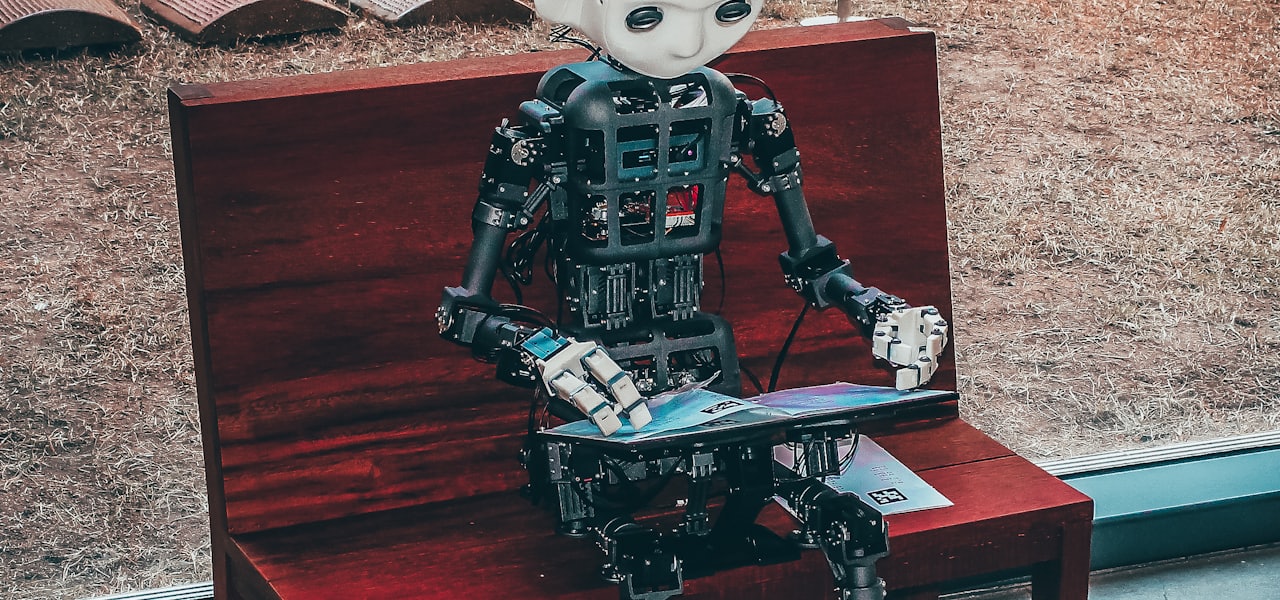
An automaton ( ; pl.: automata or automatons) is a relatively self-operating machine or control mechanism designed to automatically follow a sequence of operations or respond to predetermined instructions. Some automata, such as bellstrikers in mechanical clocks, are designed to give the illusion to the casual observer that they are operating under their own power or will, like a mechanical robot. The term has long been commonly associated with automated puppets that resemble moving humans or animals, built to impress and/or to entertain people. Animatronics are a modern type of automata with electronics, often used for the portrayal of characters or creatures in films and in theme park attractions. == Etymology == The word automaton is the latinization of the Ancient Greek automaton (αὐτόματον), which means "acting of one's own will". It was first used by Homer to describe an automatic door opening, or automatic movement of wheeled tripods. It is more often used to describe non-electronic moving machines, especially those that have been made to resemble human or animal actions, such as the jacks on old public striking clocks, or the cuckoo and any other animated figures on a cuckoo clock. == History == === Ancient === There are many examples of automata in Greek mythology: Hephaestus created automata for his workshop; Talos was an artificial man of bronze; King Alkinous of the Phaiakians employed gold and silver watchdogs. According to Aristotle, Daedalus used quicksilver to make his wooden statue of Aphrodite move. In other Greek legends he used quicksilver to install voice in his moving statues. The automata in the Hellenistic world were intended as tools, toys, religious spectacles, or prototypes for demonstrating basic scientific principles. Numerous water-powered automata were built by Ktesibios, a Greek inventor and the first head of the Great Library of Alexandria; for example, he "used water to sound a whistle and make a model owl move. He had invented the world's first 'cuckoo clock'". This tradition continued in Alexandria with inventors such as the Greek mathematician Hero of Alexandria (sometimes known as Heron), whose writings on hydraulics, pneumatics, and mechanics described siphons, a fire engine, a water organ, the aeolipile, and a programmable cart. Philo of Byzantium was famous for his inventions. Complex mechanical devices are known to have existed in Hellenistic Greece, though the only surviving example is the Antikythera mechanism, the earliest known analog computer. The clockwork is thought to have come originally from Rhodes, where there was apparently a tradition of mechanical engineering; the island was renowned for its automata; to quote Pindar's seventh Olympic Ode: The animated figures stand Adorning every public street And seem to breathe in stone, or move their marble feet. However, the information gleaned from recent scans of the fragments indicate that it may have come from the colonies of Corinth in Sicily and implies a connection with Archimedes. According to Jewish legend, King Solomon used his wisdom to design a throne with mechanical animals which hailed him as king when he ascended it; upon sitting down an eagle would place a crown upon his head, and a dove would bring him a Torah scroll. It is also said that when King Solomon stepped upon the throne, a mechanism was set in motion. As soon as he stepped upon the first step, a golden ox and a golden lion each stretched out one foot to support him and help him rise to the next step. On each side, the animals helped the King up until he was comfortably seated upon the throne. In ancient China, a curious account of automata is found in the Lie Zi text, believed to have originated around 400 BCE and compiled around the fourth century CE. Within it there is a description of a much earlier encounter between King Mu of Zhou (1023–957 BCE) and a mechanical engineer known as Yan Shi, an 'artificer'. The latter proudly presented the king with a very realistic and detailed life-size, human-shaped figure of his mechanical handiwork: The king stared at the figure in astonishment. It walked with rapid strides, moving its head up and down, so that anyone would have taken it for a live human being. The artificer touched its chin, and it began singing, perfectly in tune. He touched its hand, and it began posturing, keeping perfect time...As the performance was drawing to an end, the robot winked its eye and made advances to the ladies in attendance, whereupon the king became incensed and would have had Yen Shih [Yan Shi] executed on the spot had not the latter, in mortal fear, instantly taken the robot to pieces to let him see what it really was. And, indeed, it turned out to be only a construction of leather, wood, glue and lacquer, variously coloured white, black, red and blue. Examining it closely, the king found all the internal organs complete—liver, gall, heart, lungs, spleen, kidneys, stomach and intestines; and over these again, muscles, bones and limbs with their joints, skin, teeth and hair, all of them artificial...The king tried the effect of taking away the heart, and found that the mouth could no longer speak; he took away the liver and the eyes could no longer see; he took away the kidneys and the legs lost their power of locomotion. The king was delighted. Other notable examples of automata include Archytas' dove, mentioned by Aulus Gellius. Similar Chinese accounts of flying automata are written of the 5th century BC Mohist philosopher Mozi and his contemporary Lu Ban, who made artificial wooden birds (ma yuan) that could successfully fly according to the Han Fei Zi and other texts. === Medieval === The manufacturing tradition of automata continued in the Greek world well into the Middle Ages. On his visit to Constantinople in 949 ambassador Liutprand of Cremona described automata in the emperor Theophilos' palace, including "lions, made either of bronze or wood covered with gold, which struck the ground with their tails and roared with open mouth and quivering tongue," "a tree of gilded bronze, its branches filled with birds, likewise made of bronze gilded over, and these emitted cries appropriate to their species" and "the emperor's throne" itself, which "was made in such a cunning manner that at one moment it was down on the ground, while at another it rose higher and was to be seen up in the air." Similar automata in the throne room (singing birds, roaring and moving lions) were described by Luitprand's contemporary the Byzantine emperor Constantine Porphyrogenitus, in his book De Ceremoniis (Perì tês Basileíou Tákseōs). In the mid-8th century, the first wind powered automata were built: "statues that turned with the wind over the domes of the four gates and the palace complex of the Round City of Baghdad". The "public spectacle of wind-powered statues had its private counterpart in the 'Abbasid palaces where automata of various types were predominantly displayed." Also in the 8th century, the Muslim alchemist, Jābir ibn Hayyān (Geber), included recipes for constructing artificial snakes, scorpions, and humans that would be subject to their creator's control in his coded Book of Stones. In 827, Abbasid caliph al-Ma'mun had a silver and golden tree in his palace in Baghdad, which had the features of an automatic machine. There were metal birds that sang automatically on the swinging branches of this tree built by Muslim inventors and engineers. The Abbasid caliph al-Muqtadir also had a silver and golden tree in his palace in Baghdad in 917, with birds on it flapping their wings and singing. In the 9th century, the Banū Mūsā brothers invented a programmable automatic flute player and which they described in their Book of Ingenious Devices. Al-Jazari described complex programmable humanoid automata amongst other machines he designed and constructed in the Book of Knowledge of Ingenious Mechanical Devices in 1206. His automaton was a boat with four automatic musicians that floated on a lake to entertain guests at royal drinking parties. His mechanism had a programmable drum machine with pegs (cams) that bump into little levers that operate the percussion. The drummer could be made to play different rhythms and drum patterns if the pegs were moved around. Al-Jazari constructed a hand washing automaton first employing the flush mechanism now used in modern toilets. It features a female automaton standing by a basin filled with water. When the user pulls the lever, the water drains and the automaton refills the basin. His "peacock fountain" was another more sophisticated hand washing device featuring humanoid automata as servants who offer soap and towels. Mark E. Rosheim describes it as follows: "Pulling a plug on the peacock's tail releases water out of the beak; as the dirty water from the basin fills the hollow base a float rises and actuates a linkage which makes a servant figure appear from behind a door under the peacock and offer soap.
Compute (machine learning)
In machine learning and deep learning, compute is the amount of computing power or computational resources required to train machine learning models and large language models. More broadly, compute is the computational power or resources necessary for a computer or computer program to function. == Definition == Compute is commonly defined as the amount of computing power or computational resources required to train machine learning and large language models. The term "compute" has also been more broadly applied to cloud computing, referencing processing power, memory, networking, storage, and other resources required for the computation of any program. Compute is measured in petaflop/s-days and is used to document AI training. A petaflop/s-day (pfs-day) consists of performing 1015 neural net operations per second for one day, or a total of about 1020 operations. The compute-time product serves as a mental convenience, similar to kilowatt-hour for energy. An amount of compute is meant to give an idea of the number of actual operations performed. == History == In a 2018 analysis titled "AI and compute", artificial intelligence company OpenAI introduced the concept of compute. OpenAI identified two eras of training AI systems in terms of compute-usage. From 1959 to 2012, compute roughly followed Moore’s law. Between 2012 and 2018, the amount of compute used in the largest AI training runs increased exponentially, growing by more than 300,000 times — roughly doubling every 3.4 months. By comparison, Moore’s Law doubled every two years over the same period. One of the largest models, released in 2020, used 600,000 times more computing power than the 2012 model. After 2020, compute growth began to slow down, with the compute needed for the largest AI models continuing to slow down in 2023. The notion of compute has become increasingly used from the mid-2020s onwards. == Compute growth and AI progress == Larger AI models trained on more data and using more computational resources, tend to perform better. This happens even if the algorithms themselves remain unchanged. As early as 2018, OpenAI noted the exponential increase in compute to be have a key role in AI progress. OpenAI considers three factors drive the advance of AI: algorithmic innovation, data, and the amount of compute available for training. AI models with more compute not only improve in the tasks they were trained on but can develop emergent abilities. Incremental improvements can lead to more abrupt leaps in capabilities. AI provider SpaceXAI said in 2026 that their AI progress is driven by compute and used it a key metric in the AI training of its supercomputer Colossus, the which contains 1 million GPUs. Anthropic has a contract of $1.25 billion per month with SpaceXAI to buy all the compute capacity at Colossus 1 data center. === Criticism and policy === Increasing, promoting or constraining progress in artificial intelligence has often be done via controlling the amount of compute. Policymarkers have enacted policies and provided support to make compute resources more accessible to domestic AI researchers. In a January 2022 report, the Center for Security and Emerging Technology (CSET) suggested to institutions that increasingly powerful and generalizable AI (AGI) will likely require other strategies than maximizing compute. Some AI researchers are also concerned that government might exclusively focus on scaling compute instead of other strategies. The CSET has reported on the various bottlenecks which could explain why deep learning needs for compute have slow down: training is expensive and training extremely large models generates traffic jams across many processors that are difficult to manage. there is a limited supply of AI chips (see AI chip memory shortage). CSET advances that the main resource is human capital, specifically talented researchers — according to a 2023 published survey of more than 400 AI researchers, academic and private sector workers. The survey found that AI researchers are not primarily or exclusively constrained by compute access. However, both academic and industry AI researchers equally report concerns that insufficient compute could prevent them from contributing meaningfully to AI research in the future. High compute users are more concerned about compute access. When asked about which resource provided by the government would be the most useful to them, some AI researchers select compute, other prefer grant funding. For this goal, CSET advised policymakers to ensure that even researchers with smaller budgets could effectively contribute to AI research. Other proposed strategies include using contemporary AI algorithms, managing modern AI infrastructure or focusing on interdisciplinary work between the AI field and other fields of computer science. A 2024 study on compute access found that academic-only AI research teams often have less compute intensive research topics, especially foundation models, compared to industry AI labs. As a consequence, academia is likely to play a smaller role in advancing such techniques. The researchers suggest nationally-sponsored computing infrastructure as well as open science initiatives to boost academic compute access. === Data === A 2022 study found that current large language models are significantly under-trained, a consequence of focusing on scaling language models whilst keeping the amount of training data constant. By training over 400 language models of various parameter and token size, they found that "for compute-optimal training", the model size and the number of training tokens should ideally be scaled equally: for every doubling of model size the number of training tokens should also be doubled.
Enterprise mobile application
The term enterprise mobile application is used in the context of mobile apps created/brought by individual organizations for their workers to carry out the functions required to run the organization. It is the process of building a mobile application for the requirements of an enterprise. An enterprise mobile application belonging to an organization is expected to be used by only the workers of that organization. The definition of enterprise mobile application does not include the mobile apps that an organization create for its customers or consumers of the products or services generated by the organization. == Example == An organization, whether for-profit or non-profit, may create a mobile app for its members to track inventory levels of supplies they distribute to their target communities or materials used in product manufacturing. Such a mobile app comes under the definition of enterprise mobile application. However, the same organization may also create another mobile app to sell their products to end users or spread awareness of their services to various communities, and that mobile app would not come under definition of enterprise mobile application. == Enterprise mobile solution providers == Enterprise Mobile solution providers create and develop apps for individual organizations that can buy instead of creating the apps themselves. Reasons for Organizations buying the apps include time and cost savings, technical expertise. Today Enterprise Mobility is playing track role for enterprise transformation. Today, enterprises needs productivity is a fast way. Enterprise mobility helps business owners to build their work in a progressive way by assisting enterprise mobility solutions.